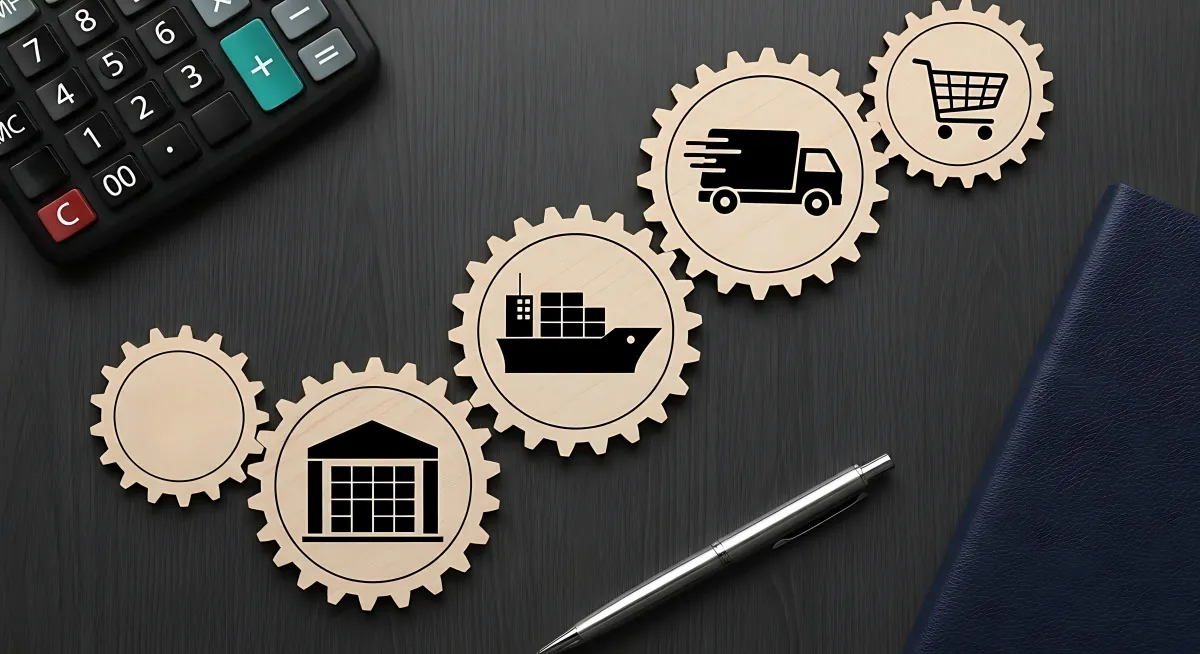
Optimizing Supply Chain Efficiency: Key Strategies
Optimizing Supply Chain Efficiency: Strategies That Actually Move the Needle
Published by LeAnne Coulter | Blue Wave Supply Chain
In today's business environment, supply chain efficiency isn't a back-office concern. It's a boardroom priority. Disruptions, rising costs, and increasingly demanding customers have made one thing clear: organizations that invest in optimizing their supply chains don't just survive volatility, they outperform competitors because of it. At BlueWave Supply Chain, we work with clients every day to turn supply chain complexity into a strategic advantage.
What Supply Chain Efficiency Actually Means
Supply chain efficiency is the ability to move products and services from origin to customer in the most cost-effective, timely, and reliable way possible. But efficiency isn't simply about cutting costs, it's about buildingbalancedoperations that improve productivity, protect margins, and keep customers coming back.
A truly efficient supply chain:
Eliminates waste and redundant steps across the end-to-end network
Leverages real-time data to support faster, smarter decisions
Delivers consistently, even when conditions are anything but consistent
Why Optimization Can't Wait
The business case for supply chain optimization is well established, and the urgency has never been greater.
Cost Reduction: Identifying inefficiencies and redundancies allows organizations to reallocate resources and reduce operational overhead without sacrificing service quality.
Customer Satisfaction: Streamlined operations translate directly to faster delivery times, fewer errors, and more reliable service — all of which drive customer loyalty.
Risk Mitigation: An optimized supply chain is a resilient one. Whether the disruption is a geopolitical event, a weather catastrophe, or a single-source supplier failure, organizations with optimized networks recover faster and lose less.
Six Strategies BlueWave Recommends
1. Leverage the Right Technology
The supply chain technology landscape has never been more robust or more overwhelming. From real-time visibility platforms and demand sensing tools to AI-driven forecasting and warehouse automation, the options are vast. The question isn't whether to invest in technology; it's which investments will deliver the most impact foryouroperation. At BlueWave, we help clients cut through the noise to identify tools that integrate with how their business runs, solve their most pressing pain points, and scale as their needs evolve. The right technology stack looks different for every organization, but the goal is always the same: give your team the data and automation they need to act proactively, not reactively.
2. Invest in Supplier Relationships
Your suppliers are an extension of your operation. Open, consistent communication builds the trust that allows for faster problem-solving, better contract terms, and greater flexibility when demand shifts unexpectedly. At BlueWave, we coach clients to treat supplier relationship management as a core competency and business performance driver.
3. Sharpen Inventory Management
Carrying too much inventory ties up capital. Carrying too little creates stockouts and missed revenue. Strategies like Just-In-Time (JIT) inventory, paired with robust demand forecasting analytics, help organizations find the right balance. Advanced analytics are particularly powerful for businesses managing seasonal demand or SKU complexity.
4. Optimize Logistics and Transportation
Route optimization tools, carrier diversification, and strategic warehouse placement can meaningfully reduce both cost and lead time. Transportation spend is often one of the largest controllable costs in a supply chain, and one of the most frequently under-analyzed.
5. Develop Your People
Technology enables efficiency, but people execute it. Regular training on best practices, new systems, and evolving regulatory requirements ensures your team is a competitive asset, not a bottleneck. This is especially important during periods of rapid change or system implementation.
6. Measure What Matters
You can't improve what you don't measure. Key Performance Indicators (KPIs), including order accuracy, on-time delivery, inventory turnover, and cost per order will provide the visibility needed to identify where performance is slipping and where gains are being made. BlueWave helps clients build KPI frameworks that are meaningful, actionable, and tied to business outcomes.
Common Roadblocks (And How to Clear Them)
Even organizations with the best intentions run into obstacles:
Limited Visibility: Without real-time data across your network, bottlenecks hide until they become crises. Investing in end-to-end visibility tools is often the single highest ROI step a supply chain organization can take.
Cost-Quality Tension: Reducing cost and maintaining quality feel like opposing forces, but with the right process design, they're not. The goal is smarter spending, not simply less spending.
Shifting Customer Expectations: Same-day delivery, order personalization, and full transparency are now table stakes for many industries. Supply chains that can't flex to meet these expectations are a liability.
FAQs
What technologies are essential for supply chain optimization?
ERP platforms, inventory management software, transportation management systems (TMS), and real-time tracking tools form the core stack for most organizations. The right combination depends on your industry, volume, and operational complexity.
How can mid-market companies optimize without enterprise budgets?
Cloud-based platforms have democratized access to powerful supply chain tools. The priority should be visibility and inventory accuracy first, then layer in automation and advanced analytics as capabilities mature.
What role does data play in supply chain management?
Data is the foundation of every good supply chain decision. From demand forecasting to carrier performance benchmarking, organizations that build strong data practices consistently outperform those that rely on gut instinct and lagging reports.
How do I build a more resilient supply chain?
Resilience comes from diversification and preparation: multiple supplier options, safety stock strategies informed by risk modeling, and documented contingency plans that your team has rigorously tested.
Supply chain efficiency is not a one-time project, it's an ongoing discipline. At BlueWave Supply Chain, we partner with organizations to design, implement, and continuously improve the supply chain operations that power their growth. Ready to take a closer look at where your supply chain stands? Let's talk.